Sunday, November 6, 2011

Disneyland Monorail ~ A fun ride from Yesterday and into the Future

Disneyland® Monorail

Ride this high-speed, "green" transportation system

that rockets along a single rail that circles Disneyland Park!

       I remember as a young child to save a few cents on parking we would often park on Harbor or Ball and then walk into the Disneyland Hotel to catch our first ride of the day into the park. We you gladly purchase our tickets at the hotel and ride the Disneyland Monorail into the park.

          The Monorail still carries passengers around the park but no longer stops at the hotel. Instead it stops in the same location but that is now in the Downtown Disney District of the resort. Still if you want a quick and easy way to enter the park you can bypass the esplanade and enter Disneyland by catching the Disneyland Monorail into the park with its stop at Tomorrowland.
Disneyland Mark VII Monorail Red.jpg
Route

          As you are whisked around the Resort for a 13-minute ride, sit back and enjoy aerial views of Fantasyland and Tomorrowland in Disneyland Park and Condor Flats, Sunshine Plaza and Hollywood Pictures Backlot in Disney California Adventure Park. The route also parallels Harbor Boulevard and travels over the Disneyland Main Entrance and Entrance Plaza, taking you above and beyond the Park scenery.

Boarding Points

          Board at the Tomorrowland station or the Downtown Disney District. It's the only Disneyland Park attraction that can be boarded outside of the Park.

The Trains

          The fleet of trains comprises the Red, Blue and Orange Mark VII trains. Computer monitored, the trains are operated and controlled by onboard pilots. Running on a 600 volt DC at about 30 mph, the trains do not emit exhaust or pollutants. Thanks to an innovative painting technique, the surface of the trains shimmers with a visual electricity. The colors shift with a brush of light — from red to crimson, from blue to teal and from orange to a golden sunburst. It's not just a stroke of technological innovation. It's a work of art!

The First in America

          The Disneyland Monorail was the first transportation system of its kind in America. It was based on a system built by the Alweg company and discovered by Walt Disney while traveling in Germany. It first appeared in Disneyland Park in 1959 with its "Googie" architecture, a space age look that was enormously popular during the 1950s. The Monorail celebrated its 50th anniversary on June 14, 2009!

History

          The Disneyland Monorail System (originally, the Disneyland ALWEG Monorail) opened on June 14, 1959, as a sightseeing attraction in Tomorrowland in Disneyland. The Mark I trains (Red and Blue) consisted of three cars each. With the debut of the four-car Mark II in 1961 (and the new Yellow train), the track was lengthened to leave the park and stop at a station at the Disneyland Hotel. The monorail trains reached their current length of five cars in 1968 with the arrival of the Mark III. More streamlined and efficient than the Mark II, the Mark III also included the arrival of Monorail Green. There were two forms of access to the monorail. Persons who were leaving the park or persons at the hotel who had purchased tickets to enter the park could purchase a single ticket to go to the hotel or from the hotel to the entrance in Tomorrowland, respectively. Persons who had not purchased admission to the park could purchase a ticket to ride the monorail from the hotel station, into the park, and back to the hotel station. To prevent them from entering the park without paying, persons buying a monorail ticket who did not have a park admission would be loaded in a separate compartment which would remain locked until the monorail returned to the hotel.

          Walt Disney originally envisioned the monorail as a practical form of public transport for the future. However, the monorail came about during a time when America's—and particularly Los Angeles'—love affair with the automobile was increasing, and monorails in the United States came to be associated only with Disney's theme parks.

          By the early 1980s, the Mark III trains were showing their age and the wear of years. In 1985, Disneyland began phasing out the Mark III trains one by one. The older trains were stripped to the chassis and rebuilt as Mark V trains. The Mark III Green went first, to become the Mark V Purple followed by the Mark III Yellow becoming the Mark V Orange. The Mark III Blue remained blue (albeit a lighter shade) and the last was Red, remaining Red. The notable difference was the loss of the bubble-top driver's area in favor of a streamlined "Learjet" look similar to the Mark IV trains at the Walt Disney World Resort. The new trains also sported closed passenger compartments (with windows that could be opened) and pneumatic doors. Following the 1985 Disney World monorail fire, a safety handrail was added along the spine of the train, as well as emergency fire exit hatches leading to the roof. The attraction's name remained the "Disneyland Monorail System", as it had been painted on the Mark III trains' skirts. The Mark V trains were built by Ride & Show Engineering, Inc., incorporating bodies that were produced by Messerschmitt-Bolkow-Blohm of Germany. Purple first made her appearance for testing in Autumn of 1986 and began regular operations a few months later. Orange was delivered in late Summer of 1987, followed by Blue in early 1988. The oldest train, Red, was also the last to be removed from the line for refurbishment in the Spring of 1988.
          In 1999, the monorail began lengthy periods of closures due to construction of Disney California Adventure theme park, which the monorail beamway passed through. Although the beamway's route was not altered, a significant amount of construction was done around the existing beamway, and much of the terrain under the beamway's support columns was regraded, necessitating the closures. Additionally, the Disneyland Hotel Station was completely demolished and a new station built in the same location.  The system began limited operations in 2000, when the Downtown Disney Station became operational, but a significant portion of the beamway was still unusable due to construction. In 2001, the monorail resumed full capacity operations, passing through the new park, as well as the hotel within the park, Disney's Grand Californian Hotel & Spa.

          In 2004, Monorail Orange was removed from the line and taken to Walt Disney Imagineering in Glendale to be reverse engineered. Monorail Blue was removed in September 2006 for rebuilding. The monorail was closed from August 21 through late December 2006 to prepare for the opening of Finding Nemo Submarine Voyage in 2007.

          The refurbishment from Mark V to Mark VII was done one train at a time. The first Mark VII train, Monorail Red, arrived at Disneyland on December 20, 2007. It was originally expected to be in service by the end of February 2008, but due to design change issues, it did not begin serving park guests until July 3, 2008. Mark VII Blue arrived on-site on April 10, 2008, began daytime riderless testing on August 1, 2008, and began guest service on September 16, 2008. Monorail Mark VII Orange arrived on-site on August 14, 2008, began riderless testing in March 2009, and began guest service on April 7, 2009. Monorails Red, Blue, and Orange make up the entire Mark VII fleet.

Operations


          The Disneyland Monorail has two stations: one in Tomorrowland, and another in the Downtown Disney district. The original Monorail was a round trip ride with no stops. In 1961, the track was expanded to connect to a station at the Disneyland Hotel, making it an actual transportation system. The original Hotel station was torn down in 1999 and a new station, now called the Downtown Disney Station, was built in the same place. All riders must disembark at Tomorrowland Station, and during peak traffic periods, the monorail offers only one-way trips where all passengers must also disembark at the Downtown Disney Station and re-board for the return trip to Tomorrowland.

          In the fall of 2006, the Tomorrowland Station was remodeled due to the Finding Nemo Submarine Voyage construction. The original speed ramps were removed, and a new concrete ramp was added on the east end of the station to handle the queue and access to the station, with concrete stairs on the west end to handle the exiting Monorail passengers.

          All passengers board at a single platform. Leaving Tomorrowland station, the monorail crosses the Disneyland Railroad and continues along Harbor Boulevard on the eastern edge of the park. Turning to enter Disney's California Adventure, it passes Monsters, Inc. Mike & Sulley to the Rescue! and Muppet Vision 3D. The track then crossed the "Golden Gate Bridge", the gateway to the California Adventure park. At this time that golden gate is being changed. Passengers can see Disneyland on the right and Disney's California Adventure on the left. The monorail then passes through Disney's Grand Californian Hotel & Spa then makes a sharp curve to the right and enters the Downtown Disney station, which has a rainforest theme, covered with several jungle-themed canopies, to complement the adjacent Rainforest Cafe.

          Downtown Disney station has one platform. After a five-minute loading, the train leaves Downtown Disney and makes a short loop around the district before crossing above the esplanade between the two parks and heads back to Disneyland. Once inside the park, the monorail crosses the railroad again and goes into a series of sharp bends and curves around Tomorrowland. The track travels above the Submarine Lagoon and Autopia. The track actually crosses the lagoon four times. The track then curves around the Matterhorn Bobsleds, giving a view of Fantasyland, then turns left to reenter the Tomorrowland Station.

          All monorails are equipped with Grover 1016 horns. The horn must be sounded when departing a station, at one point where the track parallels the currently-unused PeopleMover/Rocket Rod track, and when approaching the Matterhorn. They are also sounded when a bird lands on the track.

 Maintenance


          "Monorail Shop", as it is officially known ("Shop" for short), is Disney's monorail maintenance facility located behind It's a Small World at Disneyland and provides space for four monorails on its upper level (the bottom level houses the five steam locomotives that circle Disneyland and a bus repair facility on the west side). No train will ever be left outside the facility because routine maintenance is performed nightly.

Towing

          The diesel-powered "work tractors" are the tow trucks of the system, and can tow a train to Monorail Shop.

Safety


Emergency Evacuation

          Emergencies requiring train evacuation will be handled differently depending upon the location of the train and the nature of the emergency.

          If a train is stopped at a station platform or at the work platform, guests can exit the train onto the platform. Exiting a train is possible even when the doors of the train cars are closed. A cast member outside the car can also forcibly open the rightmost door panel of the car by releasing the air pressure holding that panel closed. The air pressure release is a handle beneath the rectangular center window that is similar in appearance to a car door handle.

          If a train is stopped on open beam, then guests evacuate through emergency exits located in the roof of the train. Guests open roof hatches by first removing decorative plastic from the ceiling above a bulkhead footstool and then by lifting open a hinged hatch that will flip across the bulkhead dividing two train cars. Guests evacuate to the roof by climbing through the open hatch onto the top of the train. The bulkheads separating cars are designed as firewalls that will contain a fire within a car to just that car. The open hatch allows guests in the affected car to transfer to an adjacent car where they can safely wait for evacuation by fire response crews.

          If the emergency affects the entire train, then guests are evacuated to the surface of the beam. Guests again open the emergency roof hatches, but do not simply move to the adjacent car. Instead, they use a small handrail present along the top of each train car to move all the way to the front of the train. The Disneyland Fire Department assists in the safe evacuation of the disabled train.

Platform Safety

          Platform gates are operated manually and remain closed until the next train arrives and cast members determine that it is safe to board.

          The trains are powered by over 600 Volts DC, drawn from a small rail (bus bar) running along the right side of the beam. This bus bar is similar to the electrified or "third" rail of a subway train.

Attraction Facts and Figures


·         When originally built, every mile of monorail track cost over a million dollars (which computes to more than 620,000 dollars per kilometer).

·         Grand opening: June 14, 1959

·         Designer: WED Enterprises

·         Trains: 3 Mark VII Red, Mark VII Blue and Mark VII Orange

·         Max Trains on Track: 3

·         Track length: 2.5 Miles (4 kilometers)

·         Ride duration: 10:30

·         Ticket required: "E" (Ticket system is no longer implemented, anybody with a valid Disneyland admission ticket may ride for free.)

·         Ride system: Monorail system powered by DC electric motors located on each car of the train, not just the front car

·         On opening day, the ribbon cutting hit a snag when the scissors failed. So Walt tore it instead.

Disneyland Monorail trains


·         Mark I : 1959 - 1961

o    3-car trains

o    colors: red and blue

·         Mark II - 1961 - 1969(Added with track expansion to Disneyland Hotel)

o    4-car trains

o    Bigger dome on top of front car

o    colors: red, blue and yellow

Built by Walt Disney Imagineering/WED Enterprises

·         Mark III : 1969 - 1987

o    5-car trains

o    137 feet (41.8 meters) long

o    colors: red, blue, yellow and green.

·         Mark V : 1987 - 2008

o    5-car trains

o    Designed by Walt Disney Imagineering

o    Car bodies built by Messerschmtt-Bolkow-Blohm of Germany

o    Seats 24 passengers in each of the five cars, plus 7 passengers in the tail cone, and 5 passengers with 1 driver in the nose cone.

o    Total number of passengers per train: 132

o    Utilizes Mk III chassis as re-engineered by Ride & Show Engineering, Inc. of San Dimas,CA.

o    The Mk V was designed to resemble the appearance of the Mark IV series monorails which were operating in the Walt Disney World Resort.

o    colors: red, blue, orange and purple

Built by Dynamic Structures

·         Mark VII : 2008–Present

o    Sleek/Retro design accomplished by installing a MkIII style nose on the existing MkV trains.

o    New island seating configuration, with one row of inward-facing seating at the front and rear ends of each car.

o    The main cabins have a capacity of 22 passengers

o    The tailcone has a capacity of seven passengers while the nosecone has a capacity of five passengers and a pilot.

o    Designed and engineered in-house by Walt Disney Imagineering and TPI Composites

o    Colors: Red, Blue, and Orange.

o    The first Mark VII monorail, Red, was delivered to Disneyland on December 20, 2007. It began service on July 3, 2008.

o    The second Mark VII, Blue, was delivered to Disneyland on April 10, 2008. It began service September 16, 2008.

o    The Third Mark VII, Orange, was delivered to Disneyland on August 14, 2008. It began service on April 7, 2009.


Disneyland.com
http://en.wikipedia.org

Saturday, November 5, 2011

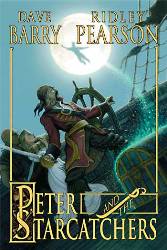
Peter & the Starcatchers

Peter and the Starcatchers


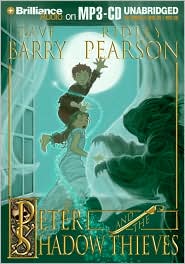
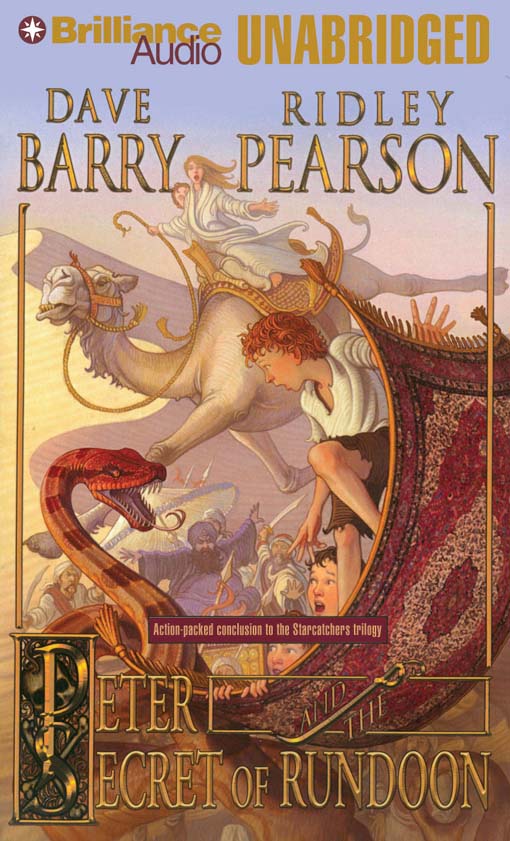
          Peter and the Starcatchers is a set of books by David Berry and Ridley Pearson. This book is a prequel to the well loved story by J. M. Berrie, Peter Pan. At this time there are four books in the series, Peter and the Starcatchers, Peter and the Shadow Thieves, Peter and the Secret of Rundoon and Peter and the Sword of Mercy. They say these books were written for 10-11 year olds but even adults will find them entertaining and engaging.

          These books, though loosely based on the characters from J. M. Berrie's Peter Pan they do not follow the cannon of Berrie's work. David Berry and Ridley Pearson have come up with an unusual twist on the classic tale.
          Here is what the books site has to say about the books, "Don't even think of starting this book unless you're sitting in a comfortable chair and have lots of time. A fast-paced, impossible-to-put-down adventure awaits as the young orphan Peter and his mates are dispatched to an island ruled by the evil King Zarboff. They set sail aboard the Never Land, a ship carrying a precious and mysterious trunk in its cargo hold, and the journey quickly becomes fraught with excitement and danger. Discover richly developed characters in the sweet but sophisticated Molly, the scary but familiar Black Stache, and the fearless Peter. Treacherous battles with pirates, foreboding thunderstorms at sea, and evocative writing immerses the reader in a story that slowly and finally reveals the secrets and mysteries of the beloved Peter Pan."  (http://disney.go.com/books/peter-and-the-starcatchers-078684907x) I believe what it says is true. When you start these books you will not want to stop until you are done reading them. Then you wish you were not done.

          The first book starts out with young Peter being put on a ship with a small group of boys, they were being sold into servitude. This is where the adventure begins! I will not tell you more because I don't wish to spoil the fun. Books two, three and four continue the story bringing it to just before the J. M. Berrie classic tale starts.

          These books are a different look at the story of Peter Pan. It gives you a fun back story on Peter Pan. For those who know and love the story of Peter Pan, The Boy That Would Wouldn't Grow Up. For fans of Berrie's Peter you can have fun dreaming of being right there with him on more adventures. They are a darker tale than the Disney movie, Peter Pan.

          So pull up a chair, grab a plate of cookies and a glass of milk and get ready for a good read!
          There are rumors that the first book, and maybe the others will be made into a movie! Peter and the Starcatchers rights were purchased by Disney in 2005. I've seen several different reports saying it is going to be live action or 3D animation. There is a release date in 2014 mentioned but not set. I've seen trailers for the movie that are live action not animated.
          The books also have their own website! Check it out. http://www.peterandthestarcatchers.com/index.html

Friday, November 4, 2011

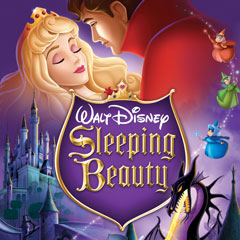
It's Film Strip Friday! Sleeping Beauty

It’s Film Strip Friday!

Sleeping Beauty

Release Date January 29th, 1959


SYNOPSIS:

          When Princess Aurora is born, the entire kingdom is delighted, except for the evil fairy Maleficent, who places a curse on the young beauty that only a prince can break. Sent into hiding for her own safety and protected by fairies Flora, Fauna, and Merryweather, "Briar Rose" lives in the forest, unaware of her royal blood. Yet despite everyone's caution, the princess's destiny plays out as she pricks her finger on the spindle of a spinning wheel, falling into a deep sleep. It's up to the daring Prince Philip to brave the fire-breathing dragon and awaken the sleeping beauty with true love's kiss.

FUN FACTS:

       Sleeping Beauty is a 1959 American animated film produced by Walt Disney and based on the fairy tale "La Belle au bois dormant" by Charles Perrault. Sixteenth animated feature in the Walt Disney Animated Classics series, the film was originally released to theatres on January 29, 1959 by Buena Vista Distribution.

Plot

          After many childless years, King Stefan and his Queen welcome the arrival of their daughter, Aurora. The newborn Princess is named after the Roman Goddess of the dawn because of how she fills the lives of the King and Queen with sunshine. While still an infant, she is betrothed to the also-young Prince Phillip, son of King Hubert, uniting their respective kingdoms. At her christening, three good fairies - Flora, Fauna, and Merryweather - arrive to bless the child with gifts. Flora gives the princess the gift of beauty, while Fauna gives her the gift of song.

          Before Merryweather is able to give her blessing, a wicked witch named Maleficent appears, expressing disappointment of not being invited to the ceremony. As revenge for the insult she curses the princess: before the sun sets on her sixteenth birthday, Aurora will prick her finger on the spindle of a spinning wheel and die.

          As Maleficent disappears, the distraught King Stefan requests that Merryweather break the curse. Even though Merryweather is unable to undo Maleficent's curse, she is able to weaken it. If Aurora was to touch a spindle, she wouldn't die, but rather fall into a deep slumber that she could only be awoken from by a true love's kiss.

          Though King Stefan orders all spinning wheels in the kingdom burned, the three fairies know Maleficent's spell cannot be stopped that easily and devise a plan to protect her. With the King and Queen's consent, they disguise themselves as mortals and sneak Aurora away with them to a woodland cottage.

          Sixteen years later, Aurora - renamed Briar Rose - has grown into a gorgeous young woman with the blessings that Flora and Fauna bestowed to her. Sweet and gentle, she dreams of falling in love one day. As Rose gathers berries, while singing, she attracts the attention of Prince Phillip as he is out riding his horse Samson in the woods. When they meet, they instantly fall in love; Phillip believing her to be a peasant girl, and she thinking him a woodsman. Realizing that she has to return home, Rose flees from Phillip without ever learning his name.

          Later that day, the fairies reveal the truth to Rose and despite her heartbreak they take her to her parents. Meanwhile, Phillip tells his father about the "peasant girl" he met, adding that he wishes to marry her in spite of his betrothal to Princess Aurora. King Hubert tries to convince Phillip to marry the princess, but fails.

          In the palace, Maleficent uses her magic to lure Aurora to a strange room, where an enchanted spinning wheel awaits her. Spellbound, Aurora touches the spindle, pricking her finger and fulfilling the altered curse. The good fairies place Aurora on a bed and place a powerful charm on all the people in the kingdom, causing them to fall in a deep sleep until the spell is broken.

          Before falling asleep, King Hubert tells Stefan of his son being in love with a peasant girl, which the fairies overhear and realize that Prince Phillip is the man Aurora has fallen in love with. They set off on a search to find, and convince him to kiss the princess and break the curse. However, the Prince has already been kidnapped by Maleficent and taken to the dungeons on the forbidden mountain after they discover the cottage been ransacked and Phillip's hat in the floor, to prevent him from breaking her spell.

          The fairies discover the Prince's whereabouts, sneak into the forbidden mountain, and free the prince. Armed with a magical Sword and Shield, Phillip and the fairies escape from the forbidden mountain. Maleficent places a massive forest of thorns around the kingdom to keep Phillip out. But as Phillip is undeterred, Maleficent calls on the powers of Hell to transform herself into a Dragon. After a long fight, Phillip defeats the dragon, kisses Aurora and restores the kingdom.

Production

Overview and Art Direction

          Sleeping Beauty spent nearly the entire decade of the 1950s in production: the story work began in 1951, voices were recorded in 1952, animation production took from 1953 until 1958, and the stereophonic musical score, mostly based on Tchaikovsky's ballet of the same name, was recorded in 1957. The film holds a notable position in Disney animation as the last Disney feature to use hand-inked cels. Beginning with the next feature, One Hundred and One Dalmations, Disney would move to the use of xerography to transfer animators' drawings from paper to celluloid. Its art, which Walt Disney wanted to look like a living illustration and which was inspired by medieval art, was not in the typical Disney style. Because the Disney studio had already made two features based on fairy tales, Snow White and the Seven Dwarafs and Cinderella, Walt Disney wanted this film to stand out from its predecessors by choosing a different visual style. The movie eschewed the soft, rounded look of earlier Disney features for a more stylized one. Since Super Technirama 70 was used, it also meant the backgrounds could contain more detailed and complex artwork than ever used in an animated movie before.

          While Disney's regular production designer, Ken Anderson was in charge of the film's overall look, Disney artist Eyvind Earle was made the film's color stylist and chief background designer, and Disney gave him a significant amount of freedom in designing the settings and selecting colors for the film. Earle also painted the majority of the backgrounds himself. The elaborate paintings usually took seven to ten days to paint; by contrast, a typical animation background took only one workday to complete. Disney's decision to give Earle so much artistic freedom was not popular among the Disney animators, who had until Sleeping Beauty exercised some influence over the style of their characters and settings.

          It was also the first time the studio experimented with the Xerox process. Woolie Reitherman used it on the dragon as a way to enlarge and reduce its size, but due to the primitive equipment available in this early test, the Xerox lines were then replaced with traditional ink and paint.

          Of interesting note is the fact that Chuck Jones, who gained fame as an animation director with Warner Bros. Animation, did some work on the film. He worked with the studio during a brief period when Warner Bros. closed its Animation department, anticipating that 3-D film would replace animation as a box office draw. When the studio was re-opened following the failure of 3-D, Jones ended his work at Disney and returned to Warner Bros. His work on Sleeping Beauty, which he spent four months on, remained uncredited. Ironically, during his early years at WB, Jones was a heavy user of Disney-style animation.

Characters and Story Development

          The name given to the princess by her royal birth parents is "Aurora" (Latin for "dawn"), as it was in the original Tchaikovsky ballet. This name occurred in Perrault's version as well, not as the princess's name, but as her daughter's. In hiding, she is called Briar Rose, the name of the princess in the Brothers Grimm variant. The prince was given the princely name most familiar to Americans in the 1950s: "Prince Phillip", named after Prince Philip, Duke of Edinburgh. The evil fairy was aptly named Maleficent (a Latin-derived adjective meaning "harmfully malicious"). Sleeping Beauty's mother is never named in the film itself or the character reference sheets but according to Disney legend around the studio she was meant to be called Queen Leah, but is otherwise always referred to as "the queen," whereas both her father and that of the prince are given names that are used several times, both in dialogue and narration.

          Walt Disney had suggested that all three good fairies should look alike, but veteran animators Frank Thomas and Ollie Johnston objected, saying that three identical fairies would not be exciting. They chose to have the fairies in different personalities, looks, and colors just like the famed Disney duck trio Huey, Dewey and Louie. Additionally, the idea originally included seven fairies instead of three, as there are seven fairies in the story's main reference, Perrault's version. In determining Maleficent's design, standard depictions of witches and hags were dismissed (as it would too closely resembled the Wicked Queen's guise in Snow White and the Seven Dwarfs) for animator Marc Davis opted for a more elegant look. In his research of the period and artwork of the Medieval times he came across a picture of a woman of a religious nature but was dressed elegantly devilish with flowing capes and clothes resembling flames. With this image in his head he centered around the appearance of flames, ultimately crowning the villain with "the horns of the devil." He even went as far as to give Maleficent bat-looking wings for her collar. In the final production the individual character of the three good fairies and the elegant villain proved to be among the film's strongest points.

          Several story points for this film came from discarded ideas for Disney's previous fairy tale involving a sleeping heroine: Snow White and the Seven Dwarfs. They include Maleficent's capture of the Prince, as well as her mocking him and the Prince's daring escape from her castle. Disney discarded these ideas from Snow White because his artists were not able to draw a human male believably enough at the time although they were incorporated into the comic book version of the film. Also discarded from Snow White but used in this film were the ideas of the dance with the makeshift prince (also used as "Prince Buckethead" in the Snow White comic book), and the fantasy sequence of the prince and princess dancing in the clouds, which was also considered but dropped from Cinderella.

Live-action Reference Footage

          Before animation production began, every shot in the film was done in a live-action reference version, with live actors in costume serving as models for the animators. The role of Prince Phillip was modeled by Ed Kemmer, who had played Commander Buzz Corry on television's Space Patrol five years before Sleeping Beauty was released. For the final battle sequence, Kemmer was photographed on a wooden buck. Among the actresses who performed in reference footage for this film were Spring Byington, Frances Bavier, and Helene Stanley.

          Helene Stanley was the live action reference for Princess Aurora. The only known surviving footage of Stanley as Aurora's live-action reference is a clip from the television program Disneyland, which consists of the artists sketching her dancing with the woodland animals. It was not the first or last time Stanley worked for Disney; she also provided live-action references for Cinderella and Anita from One Hundred and One Dalmatians, and portrayed Polly Crockett for the TV series Davy Crockett, King of the wild Frontier. An episode of The Mickey Mouse Club television series features Stanley re-enacting scenes from the Sleeping Beauty for the Mousketeers to watch (a clip from this episode is included as a special feature on the Cinderella Platinum Edition DVD).

          All the live actors' performances were screened for the animators' reference as Walt Disney insisted that much of Sleeping Beauty's character animation be as close to live action as possible.

Release and Later History

Theatrical Release

          Disney's distribution arm, Buena Vista Distribution, originally released Sleeping Beauty to theaters in both standard 35mm prints and large-format 70mm prints. The Super Technirama 70 prints were equipped with six-track stereophonic sound; some CinemaScope-compatible 35mm Technirama prints were released in four-track stereo, and others had monaural soundtracks. On the initial run, Sleeping Beauty was paired with the short musical/documentary film Grand Canyon which won an Academy Award.

          During its original release in 1959, Sleeping Beauty earned approximately $7.7 million in box office rentals. Sleeping Beauty's production costs, which totaled $6 million, made it the most expensive Disney film up to that point, and over twice as expensive as each of the preceding three Disney animated features: Alice in Wonderland, Peter Pan, and Lady and the Tramp. The high production costs of Sleeping Beauty, coupled with the underperformance of much of the rest of Disney's 1959-1960 release slate resulted in the company posting its first annual loss in a decade for fiscal year 1960, and massive layoffs were done throughout the animation department.

          The film was met with mixed reviews from critics, often citing the film being slowly paced and having little character development. Nevertheless, the film has sustained a strong following and is today hailed as one of the best animated features ever made, thanks to its stylized designs by painter Eyvind Earle who also was the art director for the movie, its lush music score and its large-format widescreen and stereophonic sound presentation.

          Like Alice in Wonderland, which was not initially successful either, Sleeping Beauty was never re-released theatrically in Walt Disney's lifetime. However, it had many re-releases in theaters over the decades. The film was re-released theatrically in 1970, 1979 (in 70mm 6 channel stereo, as well as in 35 mm stereo and mono), 1986, 1993, and 1995. Sleeping Beauty's successful reissues have made it the second most successful film released in 1959, second to Ben-Hur, with a lifetime gross of $51.6 million. When adjusted for ticket price inflation, the domestic total gross comes out to $478.22 million, placing it in the top 30 of adjusted films.

Home Video Release

          Sleeping Beauty was released on VHS, Betamax and Laserdisc in 1986 in the Classics Collection, becoming the first Disney Classics video to be digitally processed in Hi-Fi stereo. The film underwent a digital restoration in 1997, and that version was released to both VHS and Laserdisc again as part of the Masterpiece Collection. The 1997 VHS edition also came with a special commemorative booklet included, with brief facts on the making of the movie. In 2003, the restored Sleeping Beauty was released to DVD in a 2-disc "Special Edition" which included both a widescreen version (formatted at 2.35:1) and a pan and scan version as well.

          A 50th Anniversary Platinum Edition release of Sleeping Beauty, as a 2-disc DVD & Blu-ray Disc, was released on October 7, 2008 in the US, making Sleeping Beauty the first entry in the Platinum Edition line to be released in high definition video. This release is based upon a new 2007 restoration of Sleeping Beauty from the original Technicolor negatives (intrapositives several generations removed from the original negative were used for other home video releases). The new restoration features the film in its full negative aspect ratio of 2.55:1, wider than both the prints shown at the film's original limited Technirama engagements in 2.20:1 and the CinemaScope-compatible reduction prints for general release at 2.35:1. The Blu-ray set features BD-Live, an online feature, and the extras include a virtual castle and multi-player games. The Blu-ray release also includes disc 1 of the DVD version of the film in addition to the two Blu-ray discs. The DVD was released on October 27, 2008 in the UK. The Blu-ray release is the first ever release on the Blu-ray format of any Disney feature produced by Walt Disney himself.

Others Appearances

          Aurora is one of the seven Princesses of Heart in the popular Square Enix game Kingdom Hearts (although her appearances are brief), and Maleficent is a villain in all three Kingdom Hearts games, and as a brief ally at the third game's climax. The good fairies appear in Kingdom Hearts II, giving Sora new clothes. Diablo appears in Kingdom Hearts II to resurrect her defeated mistress. The PSP game Kingdom Hearts Birth by Sleep, features a world based on the movie, Enchanted Dominion, and characters who appear are Aurora/Briar Rose, Maleficent, Maleficent's goons, the three fairies and Prince Phillip, the latter serving as temporary party member for Aqua during her battle against Maleficent and her henchmen.

          She is also a playable character in the game Disney Princess.

          Princess Aurora, Prince Phillip, Flora, Fauna and Merryweather were featured as guests in Disney's House of Mouse and Maleficent was one of the villains in Mickey's House of Villains.

          Maleficent's goons appear in the Maroon Cartoon studio lot in the film Who Framed Roger Rabbit. The Bluebirds from the film also appear as "tweeting birds" that fly around Roger Rabbit's or Eddie Valiant's heads in two scenes, after a refrigerator fell on top of Roger's head and while Eddie Valiant is in Toontown, the birds are seen again flying around his head until he shoos them away.

          The first all-new story featuring the characters from the movie appeared in Disney Princess Enchanted Tales: Follow Your Dreams, the first volume of collection of the Disney Princesses. It was released on September 4, 2007.

          Various characters from the film also appear in the board game of the same name.

          Aurora is featured in a PSA for wildfire prevention with Smokey Bear.

          Flora, Fauna and Merryweather have a brief computer animated cameo appearances in Shrek as well as Aurora, who also appeared in Shrek 2 and Shrek the Third but looks different than her appearance in the Disney film.

          In the upcoming American fantasy drama series Once Upon a Time, Maleficent will be a recurring regular, as she will be a adversary of the Evil Queen, and is also sinister. Her role will be played by Paula Marshall.

Characters

·         Princess Aurora/Sleeping Beauty, voiced by Mary Costa.

·         Maleficent, voiced by Eleanor Audley.

·         Flora the pink/red fairy, voiced by Verna Felton

·         Fauna the green fairy, voiced by Barbara Jo Allen

·         Merryweather the blue fairy, voiced by Barbara Luddy

·         Prince Phillip, voiced by Bill Shirley.

·         King Stefan, voiced by Taylor Holmes.

·         Queen Leah, voiced by Mary Costa

·         King Hubert, voiced by Bill Thompson.

·         The Narrator, voiced by Marvin Miller.

·         Maleficent's Goons, voiced by Candy Candido, Pinto Colvig, and Bill Amsbery.

·         The Owl, voiced by Dallas McKennon.

Awards and Nominations

Academy Awards

·         Best Scoring of a Musical Picture (George Burns) (Lost against Porgy and Bess)

Grammy Awards

·         Best Soundtrack Album, Original Cast – Motion Picture or Television (Lost against Porgy and Bess)

Young Artist Award

·         Best Musical Entertainment Featuring Youth - TV or Motion Picture

American Film Institute Lists

·         AFI's 100 years … 100 Heroes and Villains:

o    Maleficent - Nominated Villain

·         AFI's 10 Top 10 - Nominated Animated Film

Media and Merchandise

Board Game

          Walt Disney's Sleeping Beauty Game (1958) is a Parker Brothers children's board game for two to four players based upon Sleeping Beauty. The object of the game is to be the first player holding three different picture cards to reach the castle and the space marked "The End".

          The Disney film retains the basics of Charles Perrault's 17th century fairy tale about a princess cursed to sleep one hundred years, but adds three elderly fairies who protect the princess, a prince armed with a magic sword and shield, and other details. The Disney twists on the tale are incorporated into the game, and Disney's "stunning graphics" illustrate the game board. In addition to the board game, the film generated books, toys, and other juvenile merchandise.

          The equipment consists of a center-seamed game board, four tokens in various colors, four spinners, four magic wands, and a deck of picture cards.

          The first player moves the number of spaces along the track according to their spin on their dial. If they land on a pink star, their turn ends. If they land on a yellow star, they draws a card and follows its instruction. If they draw a picture card, they retain it face down at their place. If a player spins a 6, they have the choice of moving 6 spaces or taking a magic wand. They may play the wand at any time during the game and in doing so draws 2 cards, following their instructions. A player must hold three different picture cards before entering the Path of Happiness. If they do not hold 3 picture cards, they continues around the Deep Sleep circle until they attains the required 3 picture cards. Should a player land on a purple Maleficent space, they returns one of their picture cards to the deck.

Theme Parks

          Sleeping Beauty was made while Walt Disney was building Disneyland (hence the four year production time). To help promote the film, Imagineers named the park's icon "Sleeping Beauty Castle" (it was originally to be Snow White's). An indoor walk-through exhibit was added to the empty castle interior in 1957, where guests could walk-through the castle, up and over the castle entrance, viewing "Story Moment" dioramas of scenes from the film, which were improved with animated figurines in 1977. It closed shortly after the September 11, 2001 attacks, supposedly because the dark, unmonitored corridors were a risk. After being closed for seven years, the exhibit space underwent extensive refurbishment to restore the original 1957 displays, and reopened to guests on November 27, 2008. Accommodations were also made on the ground floor with a "virtual" version for disabled guests unable to navigate stairs. Hong Kong Disneyland opened in 2005, also with a Sleeping Beauty Castle, nearly replicating Disneyland's original design.

          Le Chateau de la Belle au Bois Dormant at Disneyland Paris is a variant of Sleeping Beauty Castle. The version found at Disneyland Paris is much more reminiscent of the film's artistic direction. The Château features an animatronic dragon, imagineered to look like Maleficent's dragon form, is found in the lower level dungeon - La Tanière du Dragon. The building also contains la Galerie de la Belle au Bois Dormant, a gallery of displays which illustrate the story of Sleeping Beauty in tapestries, stained glass windows and figures.

          Princess Aurora (and, to a lesser extent, Prince Phillip, the three good fairies, and Maleficent) makes regular appearances in the parks and parades.

          Maleficent is featured as one of the villains in the nighttime show Fantasmic at Disneyland and Disney's Hollywood Studios.

Stage Adaption

          A scaled-down stage musical version of the film with the title Disney's Sleeping Beauty KIDS is often performed by schools and children's theaters.

Soundtrack Listing

  1. "Main Title"/"Once Upon a Dream"/"Prologue"
  2. "Hail to the Princess Aurora"
  3. "The Gifts of Beauty and Song"/"Maleficent Appears"/"True Love Conquers All"
  4. "The Burning of the Spinning Wheels"/"The Fairies' Plan"
  5. "Maleficent's Frustration"
  6. "A Cottage in the Woods"
  7. "Do You Hear That?"/"I Wonder
  8. "An Unusual Prince"/"Once Upon a Dream"
  9. "Magical House Cleaning"/"Blue or Pink"
  10. "A Secret Revealed"
  11. "Skumps (Drinking Song)"/"The Royal Argument"
  12. "Prince Phillip Arrives"/"How to Tell Stefan"
  13. "Aurora's Return"/"Maleficent's Evil Spell"
  14. "Poor Aurora"/"Sleeping Beauty"
  15. "Forbidden Mountain"
  16. "A Fairy Tale Come True"
  17. "Battle with the Forces of Evil"
  18. "Awakening"
  19. "Finale"


http://en.wikipedia.org

http://disney.go.com/disneyinsider/history/movies/

Thursday, November 3, 2011

The Food has Changed at Disneyland

The Food has Changed at Disneyland

          I remember the days years ago when most of what you found to eat at Disneyland was hot dogs, corn dogs hamburgers and fries. If you wanted anything other than that it was an expensive meal. Boy, have times changed things! I remember in 1979 I went to Disneyland with my best friend and the only near reasonably priced place to get anything other than a hot dog or hamburger was the French Market Café. It was one of the few places you could get a side of fresh fruit if you wanted.

          Boy, have times changed! Along the path ways fruit, vegetables and juice carts have replaced the hot dog carts. Some were replaced by the occasional Turkey Leg vender. This is not to say all you will find is healthy foods just there is more of a choice now.

          The Red Truck still sells the best Corn Dogs in town and usually has a line when open. The Corner Café on Main Street still offers Hot Dogs along with the Ragtime piano music. The Village Haus still serves burgers but they are more "upscale" and the kids menu does offers healthier choices. They now offer salads and other lighter fare. Red Rockets Pizza Port does not serve as much Pizza as it once did. Instead they have salads and pasta dishes.

          I recently went to the River Belle Restaurant, in New Orleans Square for diner with a friend. I don't eat much and usually a kid's meal is more than enough for me. I ordered the kids Roast Beef Sandwich. It was a nice size sandwich on a fresh roll and was the equivalent to about 1/2 to 2/3 of a normal size sandwich. I was given two sides with my sandwich, apple slices and red grapes along with a drink. The choices for drink were milk, low fat milk, low fat chocolate milk, juice or water. (I went with the chocolate milk.) It was just the right amount of food and was not way over priced at about $6. Around the parks apples slices, grapes and carrots are replacing fries and bread as sides for kid meals.

          The candy, popcorn, hot dogs, corn dogs, burgers, fries and pizza are still available but Disney is helping families visiting the park eat more like they might at home or maybe even a bit healthier. With offering fresh fruits and vegetables round the park at various carts and the healthier choices available in the restaurants families can enjoy without feeling as guilty.

          So whatever your desire, super healthy or no so you can find something to fit your taste at Disney Parks. If you have special dietary needs when dinning at a Disney Restaurant make sure your server knows so they can do all they can to accommodate you.
To make dining reservations at DLR restaurants call
1-714-781-DINE or 1-714-781-3463
Let them know of any special needs in advance.

Wednesday, November 2, 2011

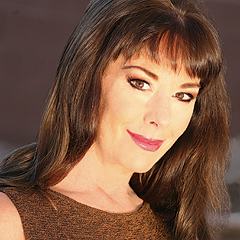
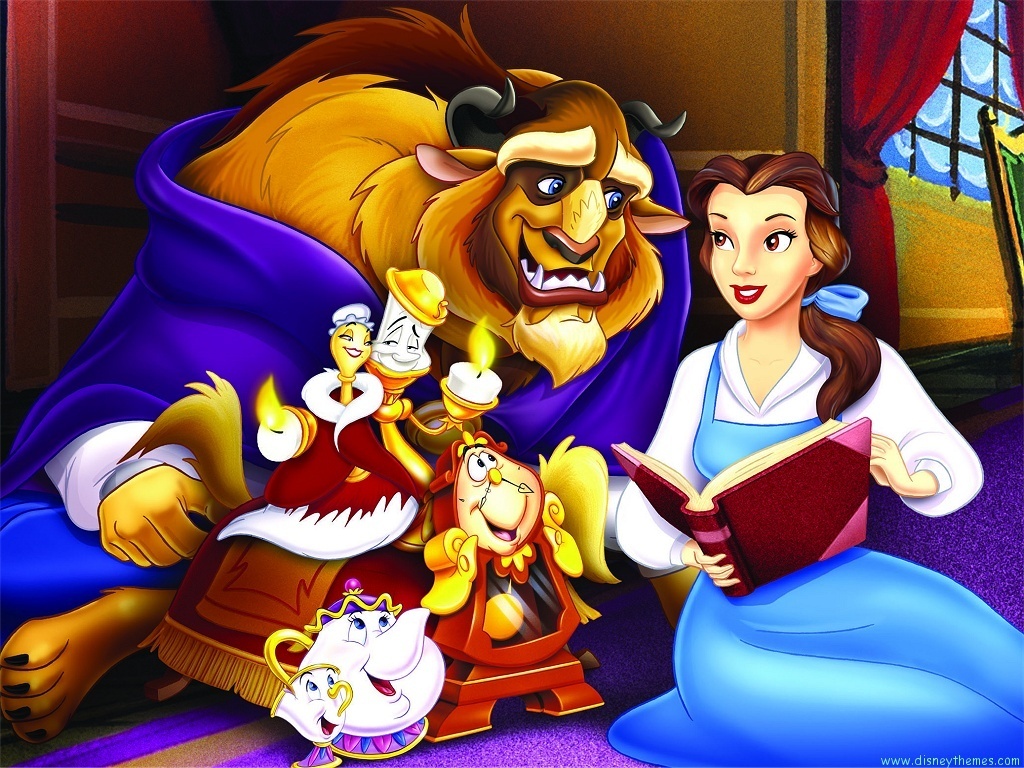
Meet Disney Princess Paige O'Hara

Meet Disney Princess Paige O'Hara

Belle

The Fifth Disney Princess

May 10th, 1956


          O'Hara was born Donna Paige Helmintoller in Ft. Lauderdale, Florida and attended Nova High School in Davie, Florida. She performed in shows with the Fort Lauderdale Children's Theatre.

          O'Hara now lives in Las Vegas, Nevada, with husband Michael Piontek.

          As the singing and speaking voice of the animated heroine Belle in Beauty and the Beast (1991), Paige O'Hara added a Disney classic to a career that has spanned Broadway, opera and concert stages, and the recording studio.

          "I had been a Disney fanatic from the time I was little," Paige once said. "As soon as I heard about the project, I called my agent and said, 'I have to be seen for this.' I ended up auditioning five times for Belle, but from the very beginning I felt very confident, because I knew this was my part. It was just one of those things you know." Paige reprised the role of Belle in the popular sequels Beauty and the Beast: The Enchanted Christmas (1997) and Belle's Magical World (1998), and the unprecedented success of Beauty and the Beast has earned her a multitude of fans of all ages all around the world.


          A veteran of the New York stage, Paige made her Broadway debut in the 1983 revival of Showboat. She was also featured in the Houston Grand Opera's 1989 production, which allowed her to make her international debut when the production was selected to open the Cairo Opera House in Egypt.

          Paige co-starred as Ado Annie (the "girl who can't say no") in a national tour of the Rodgers and Hammerstein classic Oklahoma! (1979) directed by William Hammerstein. She went on to perform the title role in the original musical comedy The Mystery of Edwin Drood (1985), both on Broadway and in the national tour, and co-starred in Gershwin's Of Thee I Sing/Let 'Em Eat Cake, conducted by Michael Tilson Thomas. In 1995, she starred as Fantine in the award-winning Les Miserables on Broadway, mesmerizing audiences with her heart-wrenching rendition of the song "I Dreamed a Dream."

          With demand for her services growing around the world, Paige toured Japan with the Hollywood Bowl Orchestra, and in London starred as Venus in the BBC's broadcast of Kurt Weill's One Touch of Venus (1995). She is a featured vocalist on the recording of Mack and Mabel in Concert, also recorded live in London, and starred as Nellie Forbush in the Australian production of South Pacific (1996). As a concert soloist, she has appeared at the Hollywood Bowl, the Boston Pops, the Turin Opera House in Turin, Italy, and with orchestras across the United States.

          On film, sharp-eyed moviegoers spotted her in a cameo role, playing a television soap opera star in Disney's 2007 live-action/animated fantasy Enchanted.

          She now lives in Las Vegas, where she and her husband appeared in The Great Radio City Music Hall Spectacular with the Radio City Rockettes and where she can be seen in the smash hit Menopause: The Musical, now playing at the Luxor.

          "I love Belle," Paige once said. "I love the fact that she is a revolutionary kind of heroine. She's very smart and odd and is looking for adventure -- not a husband. She was a first, in a lot of ways, for a Disney Princess and was ahead of her time in the film and for Disney. I think that's why, almost 20 years later, people still love her."


http://en.wikipedia.org

http://disney.go.com/disneyinsider/history/legends


Tuesday, November 1, 2011

Shall we go to Disneyland or Walt Disney World??

Shall we go to Disneyland or Walt Disney World?

          You have saved up and are planning a Disney Trip. Where do you go? Disneyland Resort (DLR) or Walt Disney World (WDW)? What is the difference?

          Disneyland Resort has two parks, Disneyland and Disney California Adventure and three hotels. There are many other non Disney hotels within walking distance of the parks. Many of the rides at the parks are also found at WDW but there are differences in the rides. DLR is 160 acres in size. DLR is more compact and things are closer together. I live in So. Cal. and go to DLR often. I've only spent one week at WDW.

          If you need to go to a market or would like to eat off Disney property to save money there are many options right around the park. Many are within walking distance and within driving distance you have all major markets, stores (such as Walmart) and restaurants. This gives you the option to drop by, let's say Walmart and pick up a case of water and snacks to take into the park once you get to the resort. You can also get groceries to save you money on meals.

          There is enough to do at DLR that if you want to ride every ride and see every show and attraction you can do that in five to seven days without running yourself crazy. I say a week is a perfect amount of time and you can do the things you enjoy a second time.

          If you go to WDW there are four parks, two water parks, golf, twenty-three themed resort hotels and a campground. The WDW Resort property is 30,080 acres (47 sq miles) in size. Things are spread out and there are Disney Buses and boats to take you from one location to another. There are gift shops with resort priced snacks, drinks and some minor food items but there are no markets if you wish to save money making sandwiches. You also can go off property if you have a car or wish to call a taxi.

          There are hotels and vacation homes you can rent around the park. If you choose to stay off property you will have to drive into the park. There are stores outside but you will need to drive to them taking out of your fun time at WDW. It is harder to bring in food and such to save money at WDW because of the logistics.

          Just because of its size of WDW it is impossible to see everything even if you are there for a week. My personal experience and feeling is you can't do less than a week at WDW if it is your first time. That is just enough time to get a good taste of the adventures you can find there. I can only guess it would take several weeks or a month to see everything and even then I don't think you could see everything there.

          Now I'll tell you my emotional response to choosing the park to go to. I'll leave the fact that I go to DLR at least once a month out of it.

          DLR is more compact and feels like you are playing in Uncle Walt's personal playground. In fact you are, Walt built Disneyland so he could have a place to play. Things are closer and smaller at DLR due to the limited space. WDW is huge and it feels impersonal to me. Both are fun and have plenty of fun to offer. It is up to you where you go. I do suggest that any true Disney fan must see DLR at least once because it is the original. There is so much history there.

          I love the intimate feeling of DLR. I appreciate the history and the feeling of walking in Walt's footsteps at Disneyland. But I will not turn down time at WDW either.